RUMEN TANK AS A NOVEL TECHNIQUE FOR MORE SUSTAINABLE FISH PRODUCTION
Introduction:
One of the key factor to activate the biofloc system is the adding of carbon sources into the production tanks to reserve the C:N ratio around 10:1. A considerable amount of Lignocellulosic materials as waste by products are being generated through agricultural practices. Much of the lignocellulosic biomass is often disposed of by burning which led to environmental impacts. Typically, most of the agriculture lignocellulosicis comprised of about 10-25% lignin, 20-30% hemicellulose, and 40-50% cellulose. In early experiment, celleluose was compared with other carbone sources glucose, starch, cellulose for their efficiency in biofloc system. Celleluose shows a promising results as with the onset of the experiment the ammonium recorded high figures that gradually decreased to reach the optimum level for fish growth, as other carbon sources. Previous result had encouraged redirecting agriculture lignocellulosicis to act as a useful carbon sources to be used in biofloc system. Examine the possibility of using agriculture wastes as carbon sources instead of Molasses in biofloc technique was the motivation behind this experiment.
Materials and Methods
The experiments were carried out in 9 plastic tanks with water capacity of 210L for 60 day. Tilapia juveniles with initial body weight 48.29 g were randomly distributed in the tanks at a density of 13 fish/tank (186 fish/ m2).Each group consisted of three replicates. The C:N ratio was maintained around 10:1 in water. Sufficient mixing intensity and saturated dissolved oxygen were ensured in each tank. Bio-flocs were harvested from 50 mL of tank water and biomass was collected by centrifugation (10 min, 8000 X g). DGGE based on the protocol of Muyzer et al. (1993) was performed using the Bio-Rad DCode System for DGGE. The chemical properties of water samples were determined according to APHA, 1998.
Results:
The biofloc volume recorded its highest values for fish reared using molasses as the carbon source .Treatment exposed to both Bean straw, Sugar can bagasse lead to the highest total suspended solids (TSS) values. Ammonium values were around the normal range for all treatments. Nitrate accumulations increased with using Sugar can bagasse as carbone source. While the lowest levels Nitrate were recorded for fish reared under bean straw. The FCR in different treatments ranged from 1.45 to 1.53. The best FCR (1.45) was observed for fish reared under Sugar can bagasse (P > 0.05). Significant difference in Final weight were observed between different treatment. the best value recorded for sugar can bagasse and bean straw with no significant different. While,weight gain values recorded no significant difference between treatments.
Conclusion:
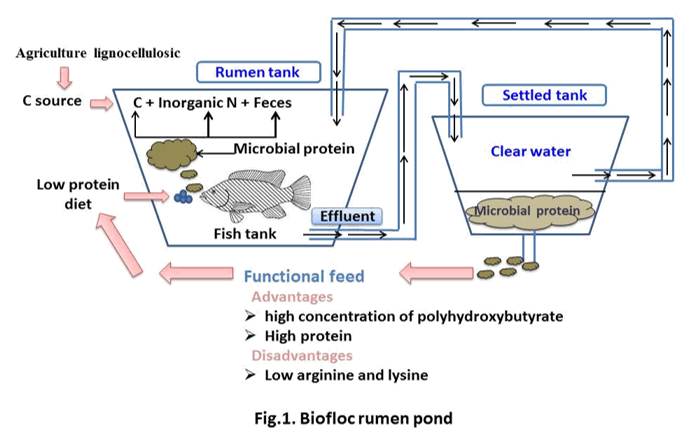
It was proved that agricultural lignocellulosic could be used as carbone source under biofloc system without adverse effect on water quality or fish growth performance . Using biofloc pond as a rumen lead to eco-friendly application of fish culture where, system benefit from agriculture by product and environmental impact could be avoided (Fig 1)
Acknowledgement
This work was supported by Science & Technology Development Fund (STDF), Egypt under grant no 5671.
References
Ashraf suloma, Rania S Mabroke, Azab M. Tahoun, Abd El-Naem F.A Zidan, Osama M. El-Husseiny, Wael El-Menofy, Mohamed H.M. El-Shafiey and Hesham R.A. Mola (2015). Investigation of the contribution of microbial biofloc to nitrogen removal under different environmental conditions using pcr-dgge technique. World Aquaculture 2015, Jeju, Korea, 26-30 May.
Ashraf Suloma, Abd El-Naem F.A Zidan, Rania S Mabroke. Tahoun A.M. (2015). Biofloc system from lab to field: more pros than cons. Middle East Aquaculture Forum (MEAF) - Dubai 5-6 April. United Arab Emirates.
Abd El-Naem F.A Zidan, Ashraf Suloma, Rania S Mabroke and Tahoun A. M. (2015). Effect of water temperature on biofloc formation. Middle East Aquaculture Forum (MEAF) - Dubai 5-6 April. United Arab Emirates.
Suloma A, M. I. Hassane, Khaldon El-Shanti, Rania S. Mabroke,Ehab. R. El-Haroun (2012) Tilapia nutrition under biofloc system: new findings promise new insights towards more sustainable production. XV International Symposium on Fish Nutrition and Feeding Molde, Norway • 4-7 June 2012